
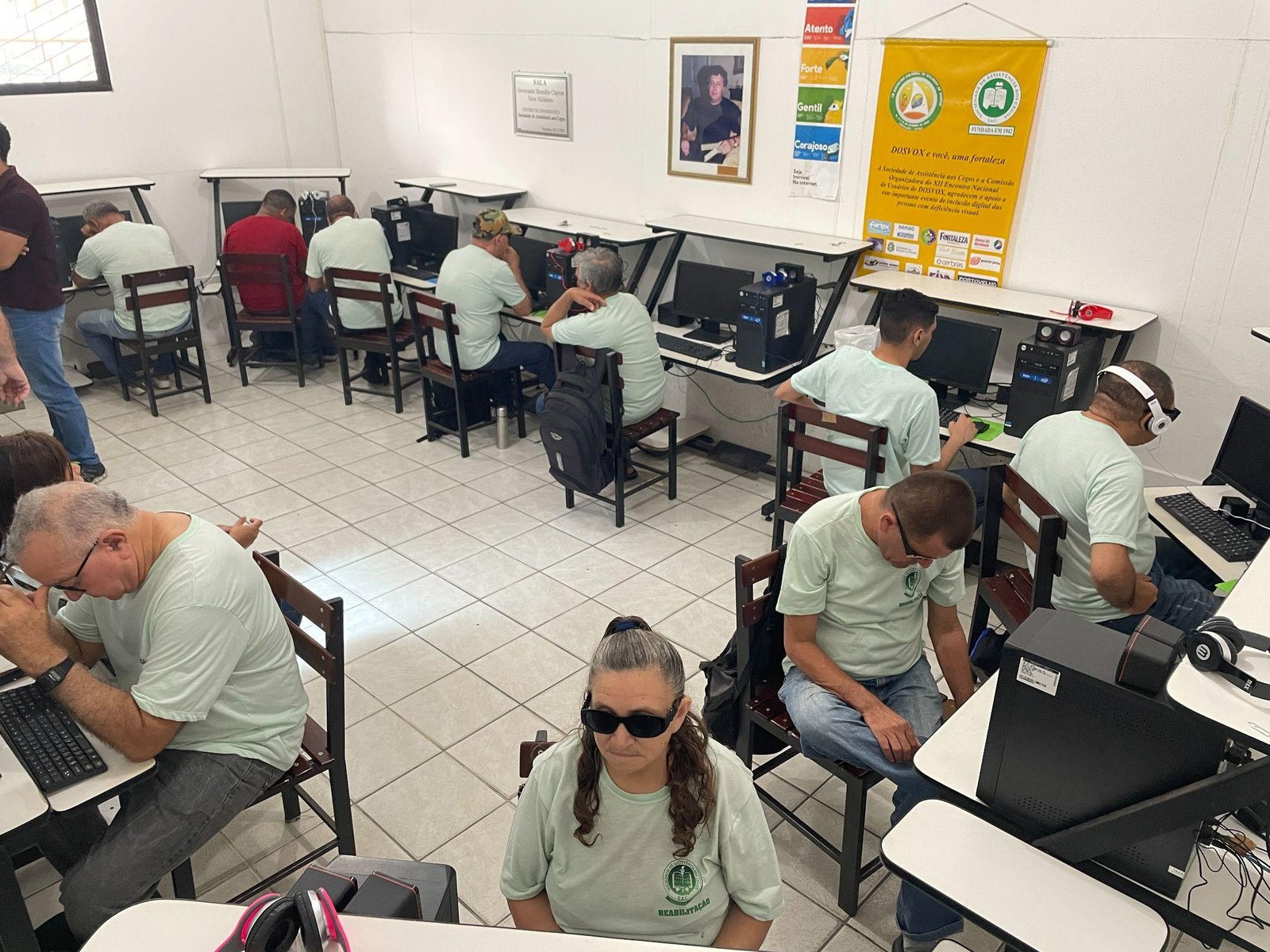
Assistive Technology
Our own devices and platforms for the digital inclusion and urban mobility of blind people — from laboratory research to real classrooms.
Origin
From a pitch to the Ministry of Education to a product line
In 2010, the Institute presented then Minister of Education Fernando Haddad with a proposal for PORTÁCTIL, a platform for the literacy and social and digital inclusion of blind children. The project was approved and developed with funding from FNDE, Brazil's National Education Development Fund.
That was the start of a continuous assistive technology research line at the Applied Research and Automation Development Laboratory of Instituto Federal do Ceará — which built and tested devices in real use by blind students and, more recently, gave rise to InovaEye, an independent startup that takes those devices to schools across Brazil.
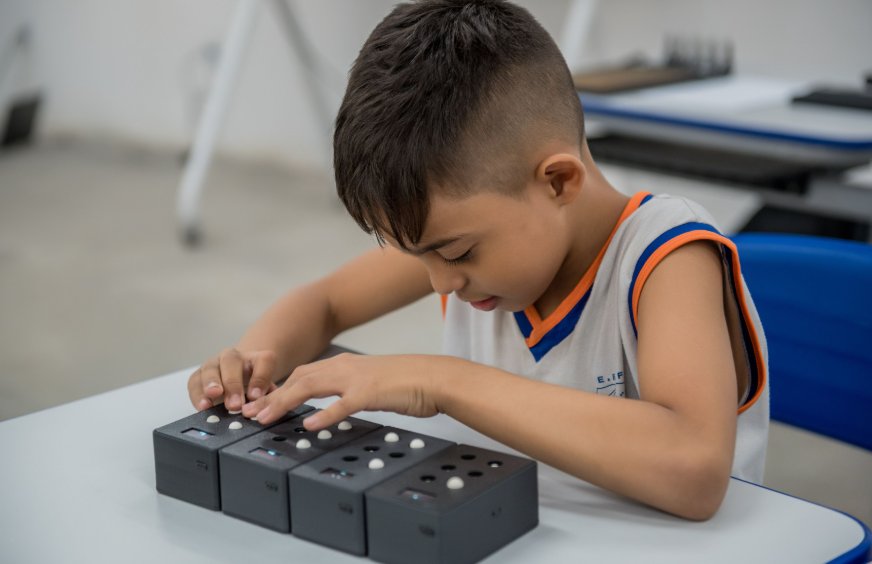
Sala Braille
A line of devices for braille reading, writing and literacy, developed at the Institute.
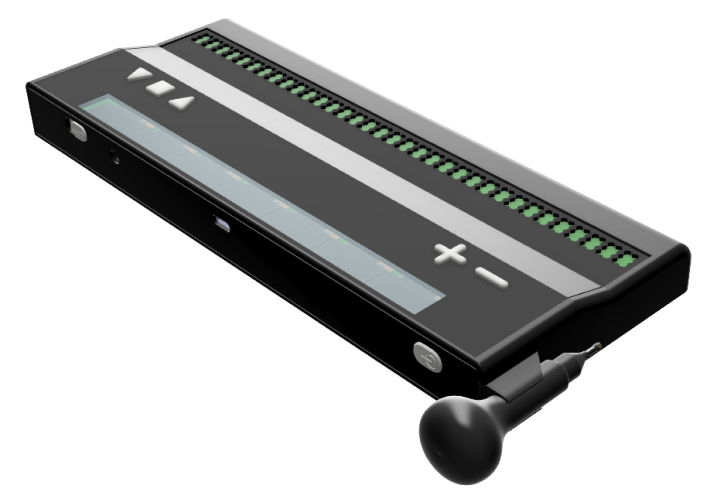
SlateBraille
Digital slate: transcribes braille writing directly into digital text.
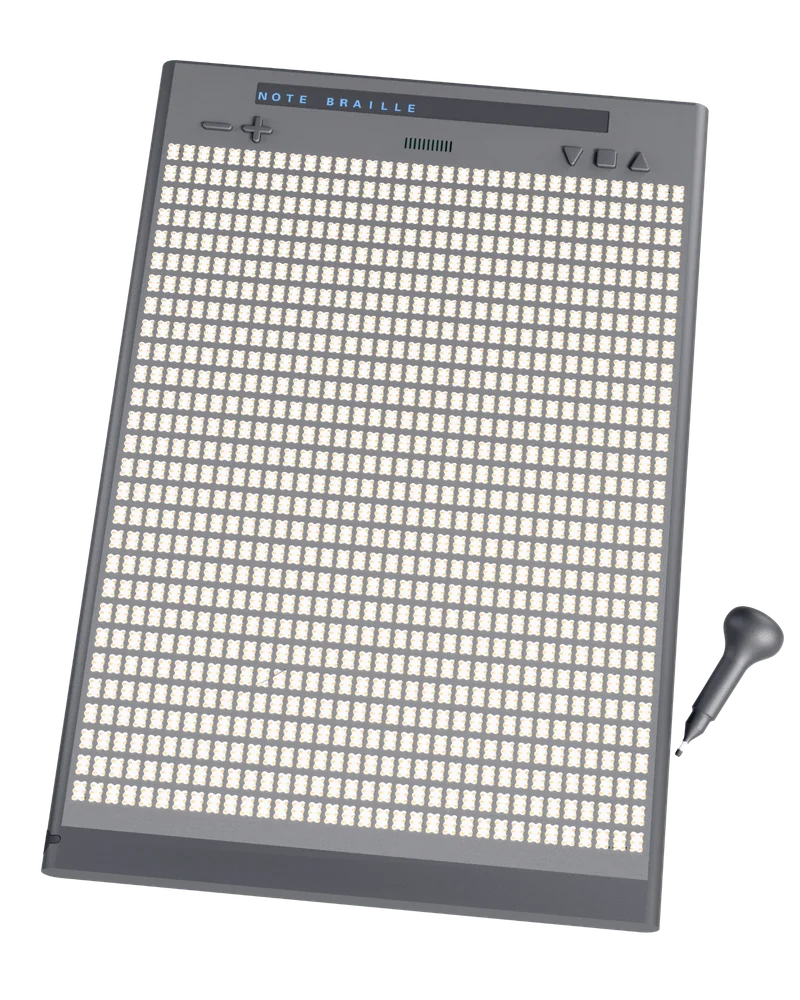
NoteBraille
Braille display for reading and writing, with a support stylus — already in use in real classrooms.
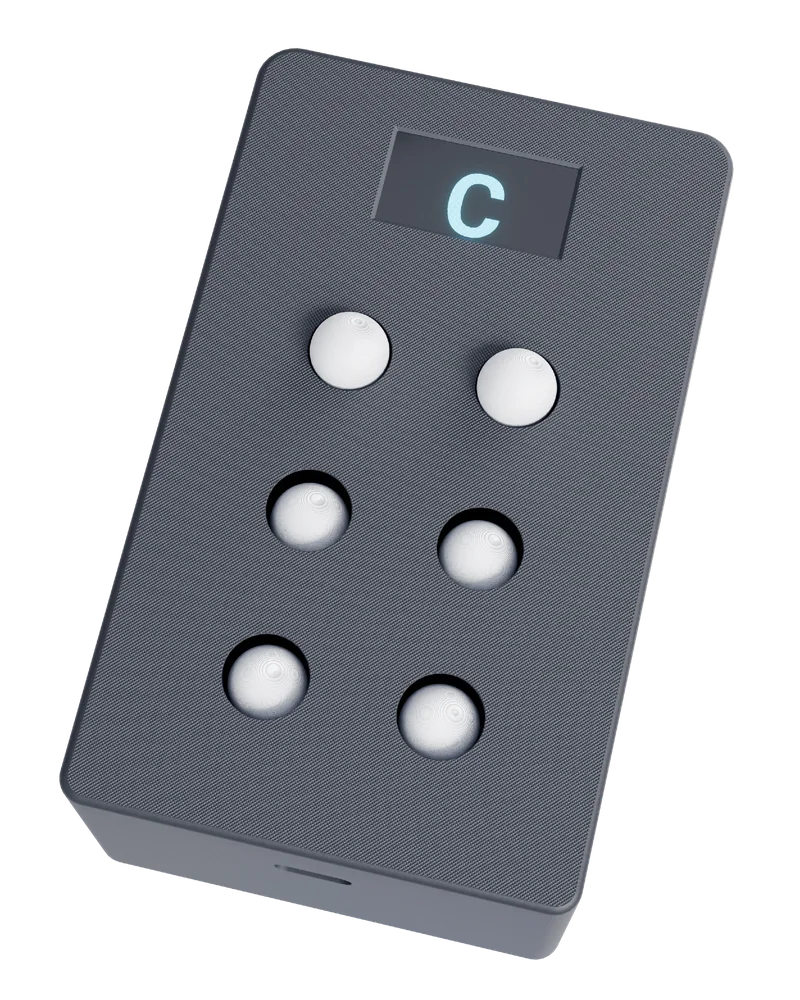
EdukaBraille
Compact braille literacy device, with a companion app.
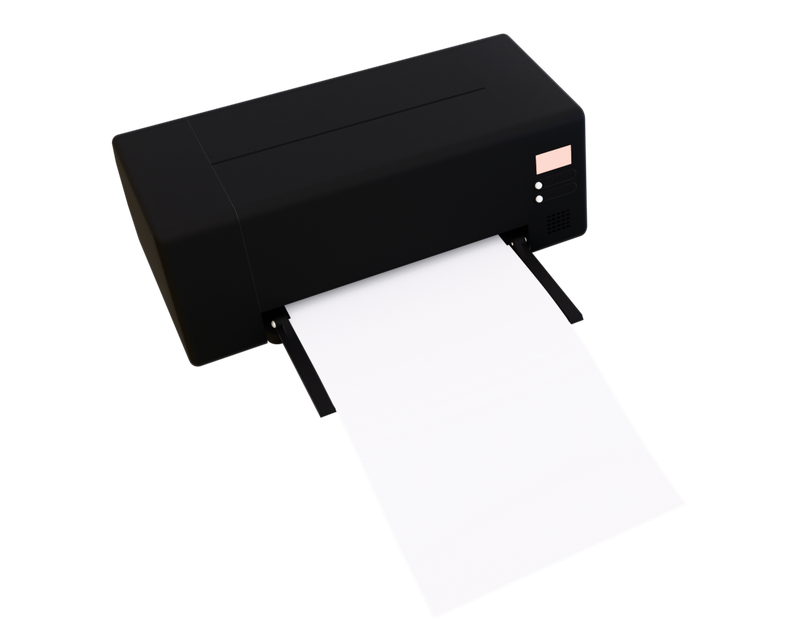
BraillePrinter
Braille printer for producing teaching material in braille.
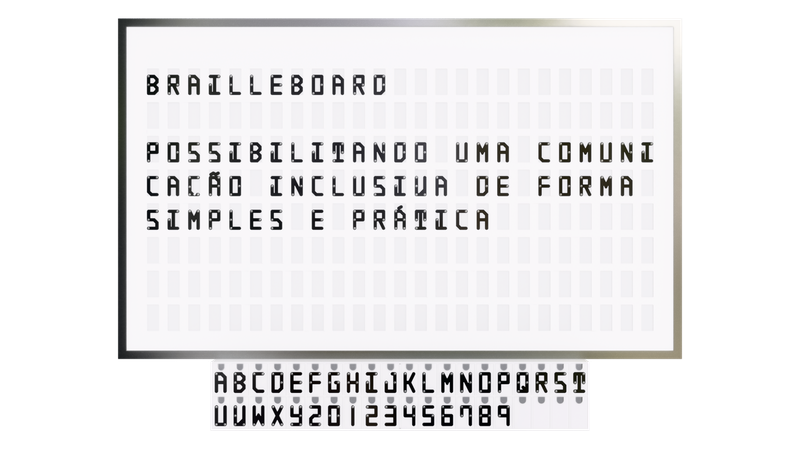
BrailleBoard
Braille panel for communication and group exercises in the classroom.
See it working
Real demonstrations of the devices, recorded at the Institute.
SlateBraille
Braille typing being transcribed in real time.
BraillePrinter
Printing teaching material in braille.
NoteBraille
Powering up and configuring the reading and writing device.
EdukaBraille
Assembling the braille literacy blocks.
Spin-off
Sala Braille is now InovaEye
The technology developed at the Institute gave rise to InovaEye, an independent startup that turned Sala Braille into a complete commercial ecosystem — devices, an app with a live remote-class platform, teacher training and ongoing technical support — now sold to schools and school networks across Brazil.
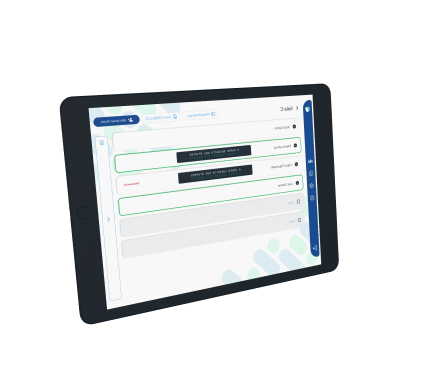
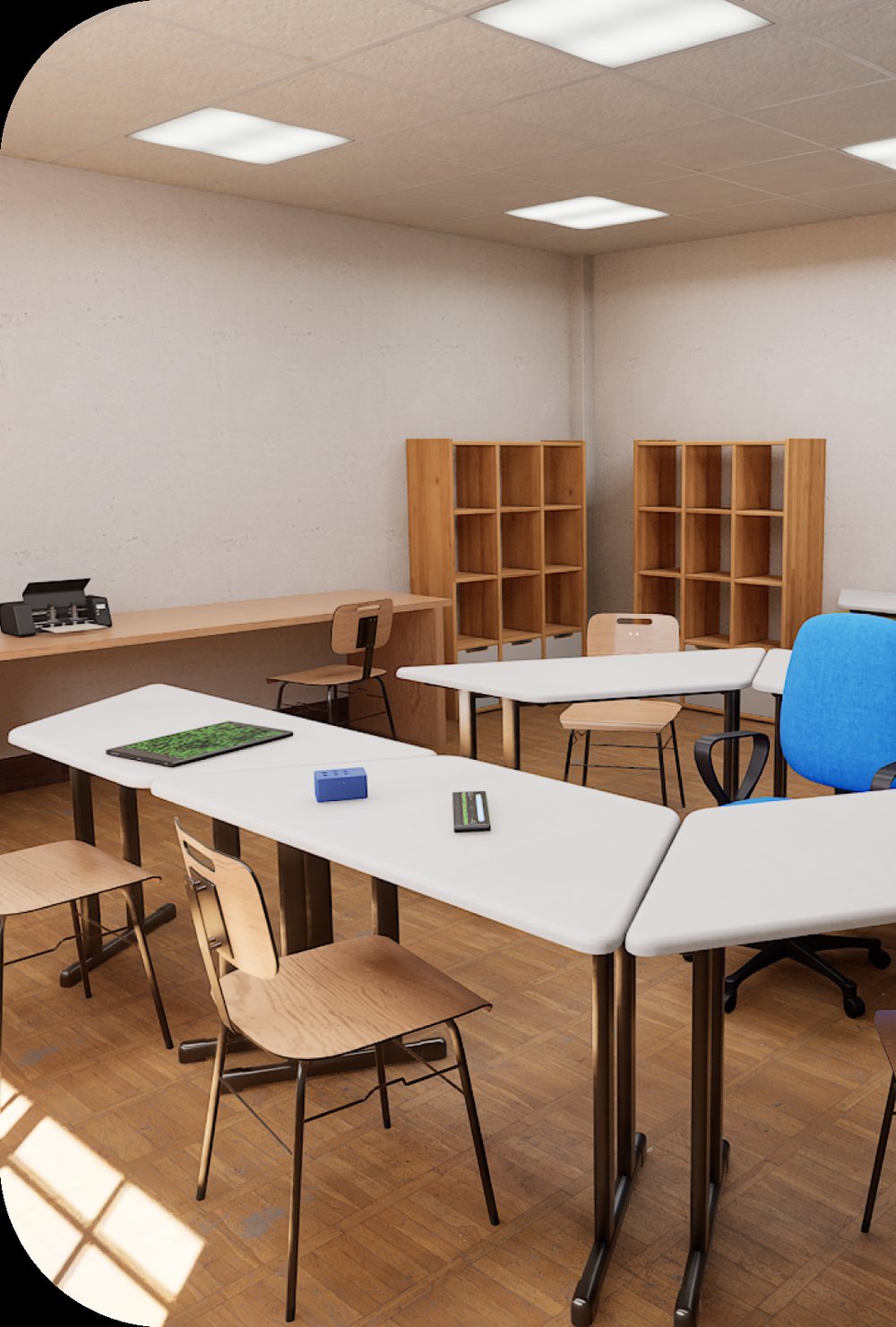
Sala Braille Essential
A starting point for schools taking their first steps in braille literacy — a lean set of equipment that grows along with the school.
Sala Braille Complete
A full ecosystem of devices, app and teacher training, connecting the classroom, the library and the computer lab.
Sala Braille Custom
For schools and school networks with greater demand — a setup tailored to the number of students and the facilities available.
BlindNav — Urban Mobility
An orientation and mobility platform for blind people, from home to destination.
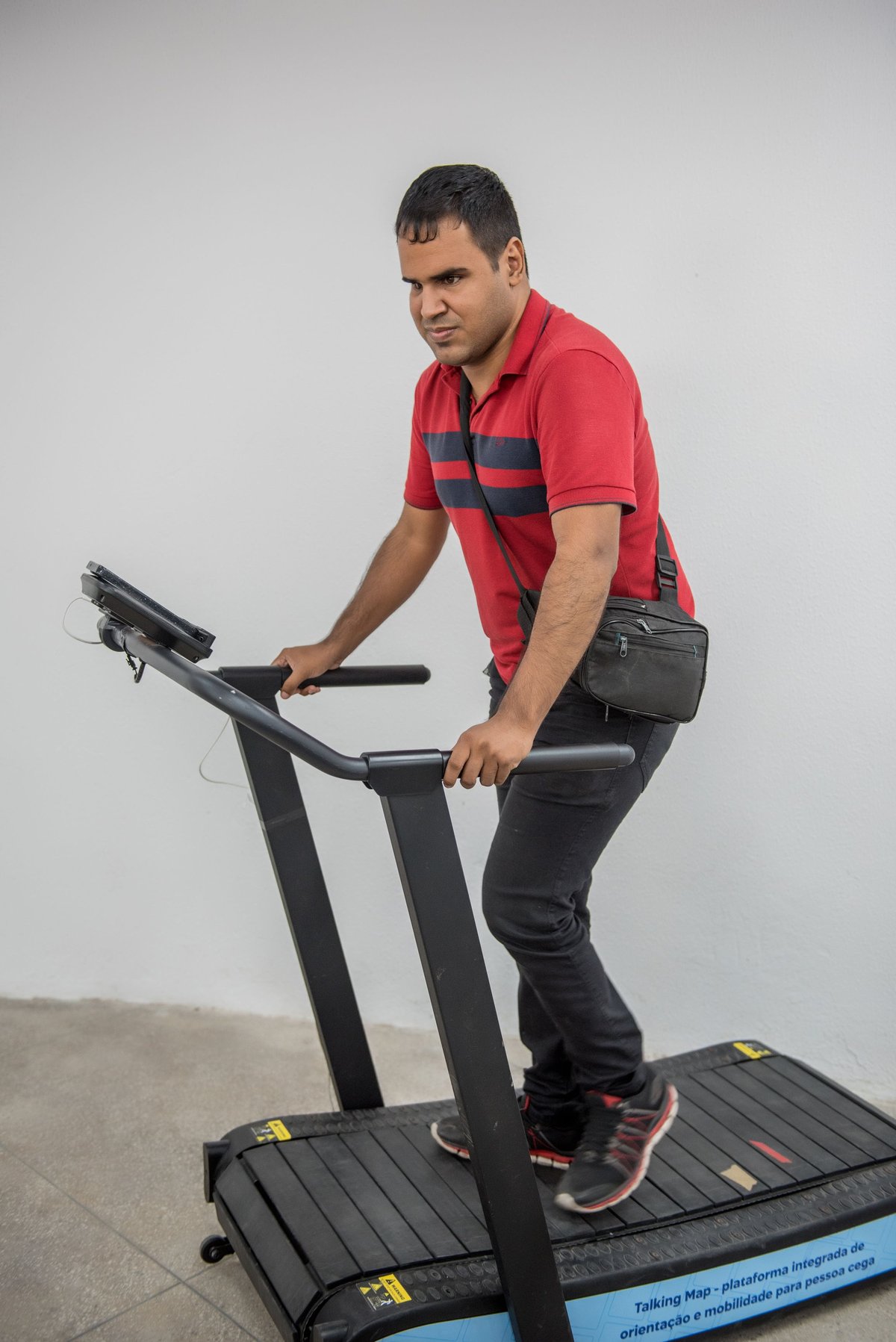
Virtual Tour
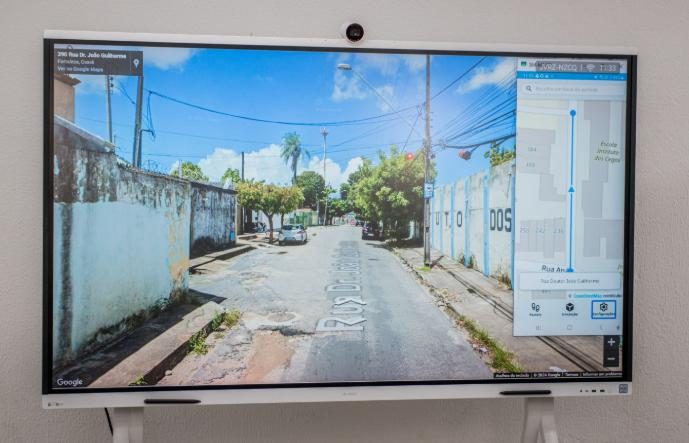
A connected treadmill that simulates real routes via Street View, practising orientation before leaving home.
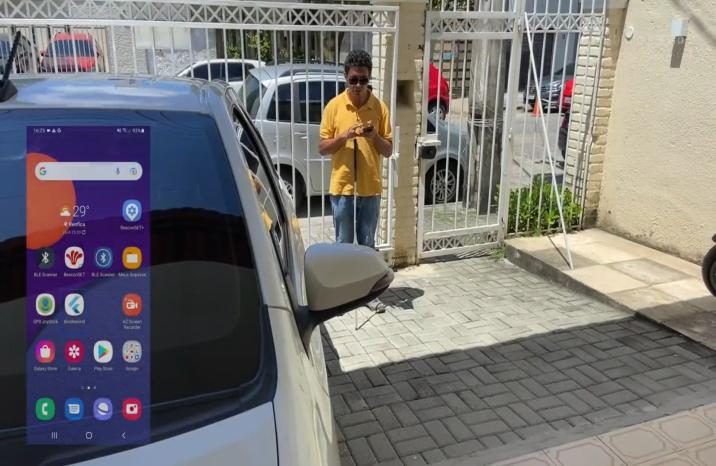
BlindNavOutdoor
Voice navigation app for getting around on public streets.
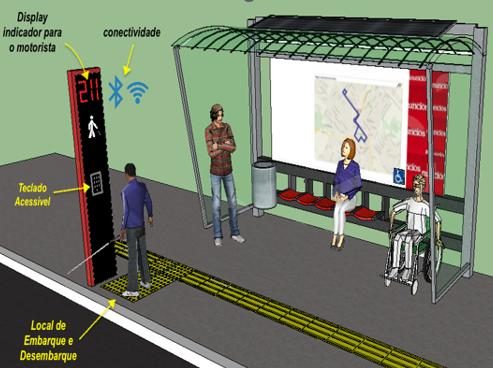
Accessible Bus Stop
A smart bus stop concept with an accessible keypad, a display for the driver and connectivity.
BlindNav Indoor
Assisted navigation inside the Institute's own building — choosing a destination by voice and being guided to the spot.
BlindNav Outdoor
Voice navigation on public streets, with the user travelling by car.
Real pilot
Instituto dos Cegos Antônio Bezerra
In partnership with the Ceará State Government (Department of Education), the Institute deployed the first Sala Braille and an Orientation and Urban Mobility Laboratory in a real school, now in use by blind students.
blind people trained in digital basics
in basic computing
in applied computing (IT management)
in introduction to programming
Equipment produced
- 90 enlarged braille cells produced
- 90 digital slates (SlateBraille)
- 10 Notebrailles
- 10 braille printers
What's next
In development
- Braille RW line — braille reading and writing combined in a single device.
- Real-time Libras translator — a 3D avatar for automatic translation into Brazilian Sign Language in the classroom.
Programme carried out with the support of Softex (PPI), FNDE and Brazil's Ministry of Education.